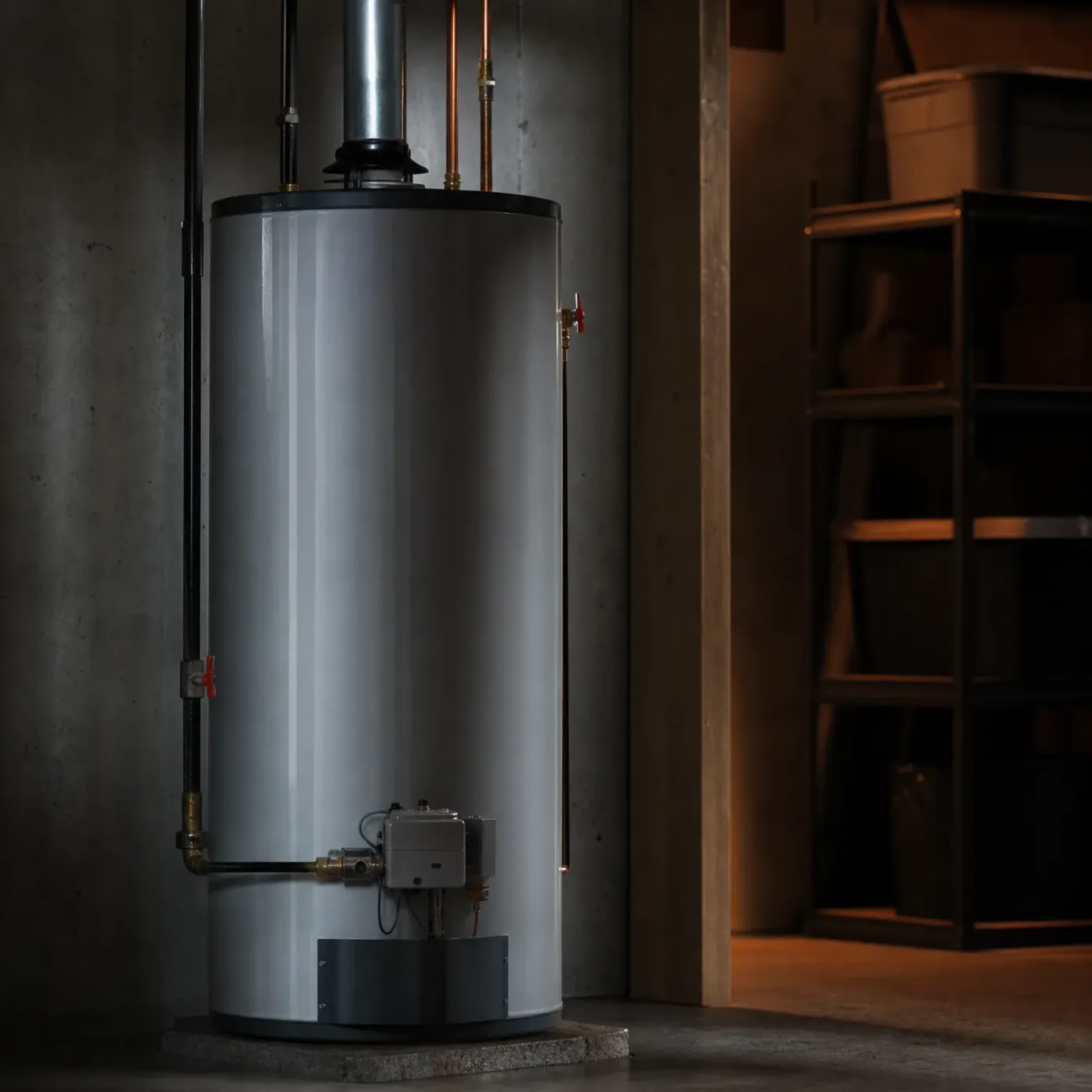
A large gray cylindrical gas water heater with copper and black pipes and a flue stack, standing on a concrete pad against a concrete wall, with a dark metal shelving unit in the background.

Get the right pro for your water heater

Why your water heater is leaking in Arizona

A puddle at the base, a wet spot on the wall behind it, or water dripping from a fitting all mean something different. The tank could be rusted through, a valve could be loose, or a line could have failed. This page walks through what to check before you call anyone, and what each sign points to.

Get my match

A leaking water heater usually comes down to three things: a loose fitting, a failed valve, or a tank that's rusted through from the inside. Fittings and valves can be tightened or swapped out. A rusted tank can't be fixed, since the rust has already eaten through the steel, and once that happens the tank needs to be replaced. Most homes in Arizona run electric water heaters, and the heat these tanks cycle through year after year works the lining down over time until it gives out at a seam or the bottom. Where the water is coming from tells you which problem you have. A puddle under the tank points to the tank itself. Water only at a fitting or valve is a smaller fix. Either way, water pooling at the base means something is already failing, not something about to fail.

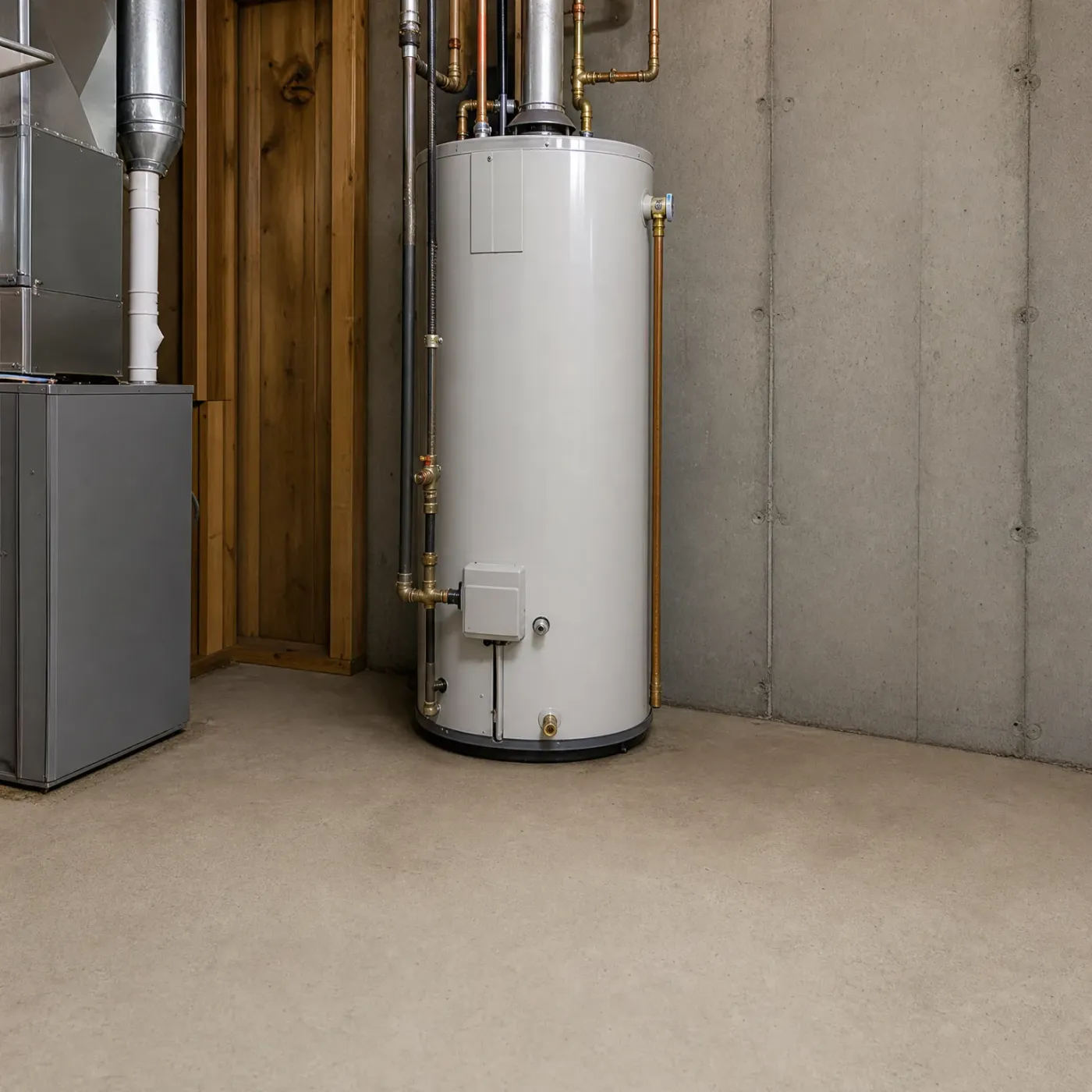
A white cylindrical gas water heater with copper and steel pipes stands against a concrete basement wall beside a gray furnace and wood-paneled wall.

A fitting or valve doing its job

A water heater connected to tight copper lines, with dry fittings and no rust on the tank, is just doing its job. The pressure relief valve and the drain valve can still fail even on a unit like this, but a dry floor means neither has let go yet.
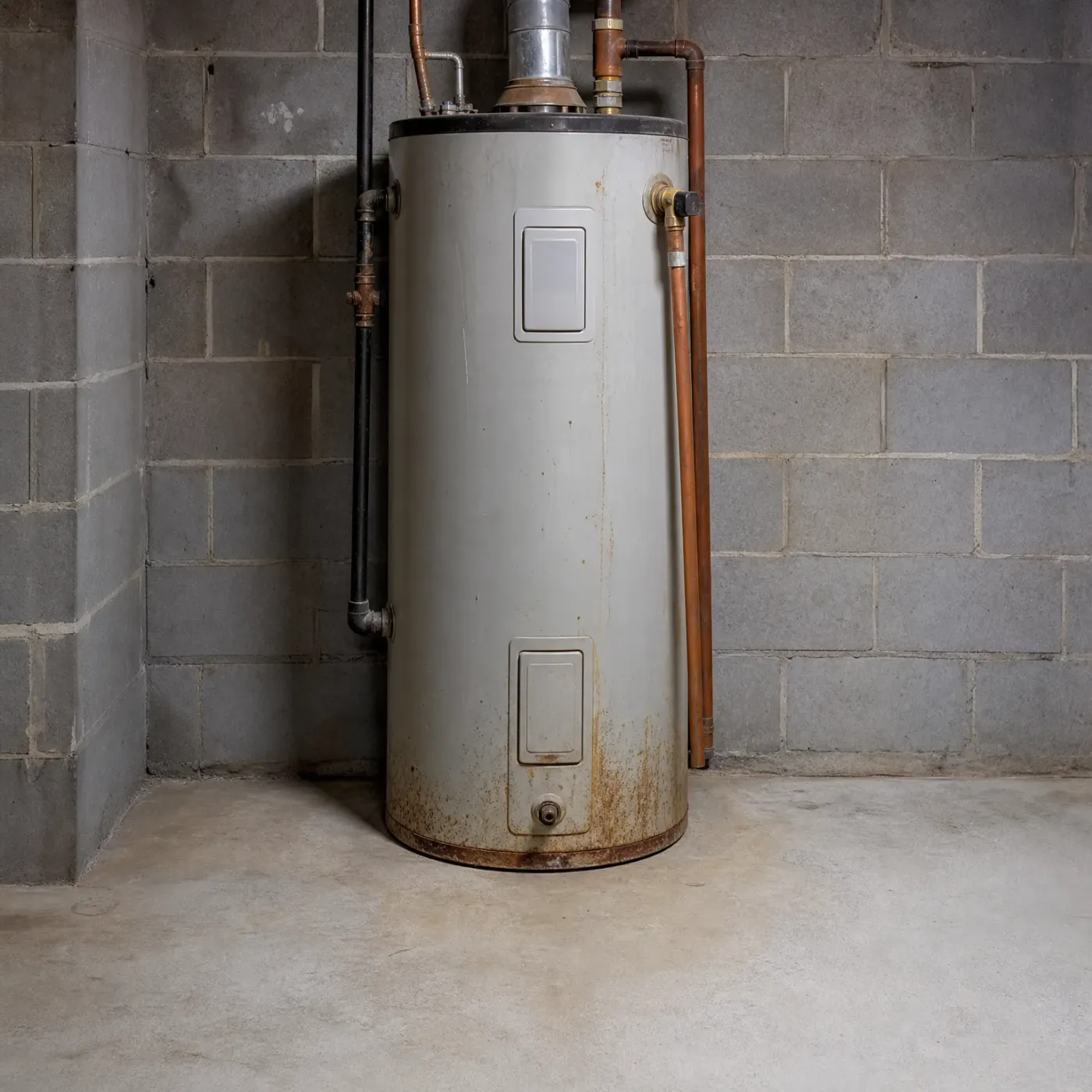
A rust-streaked cylindrical water heater with copper and black metal pipes stands in a concrete-block basement corner on a bare concrete floor.

Rust at the base is the tank talking

Rust spreading across the base and along the seams means the tank is corroding from the inside out. Once rust reaches the outer shell like this, the tank itself is leaking, not a fitting, and no amount of tightening will stop it.

What's causing the water around your heater

Arizona's hard water leaves scale inside the tank, and that scale traps heat against the steel until it rusts through from the inside, which is why so many leaks here show up as a slow weep at the bottom seam rather than a sudden burst. You might notice the drywall behind the closet staining, a faint metallic smell near the unit, or the pan underneath finally holding water instead of sitting dry. If the heater sits on a wood floor or upstairs over a finished room below, a leak left alone can soak through and warp or stain whatever it reaches. None of that means it's urgent tonight, but a tank that's already rusting won't stop on its own.

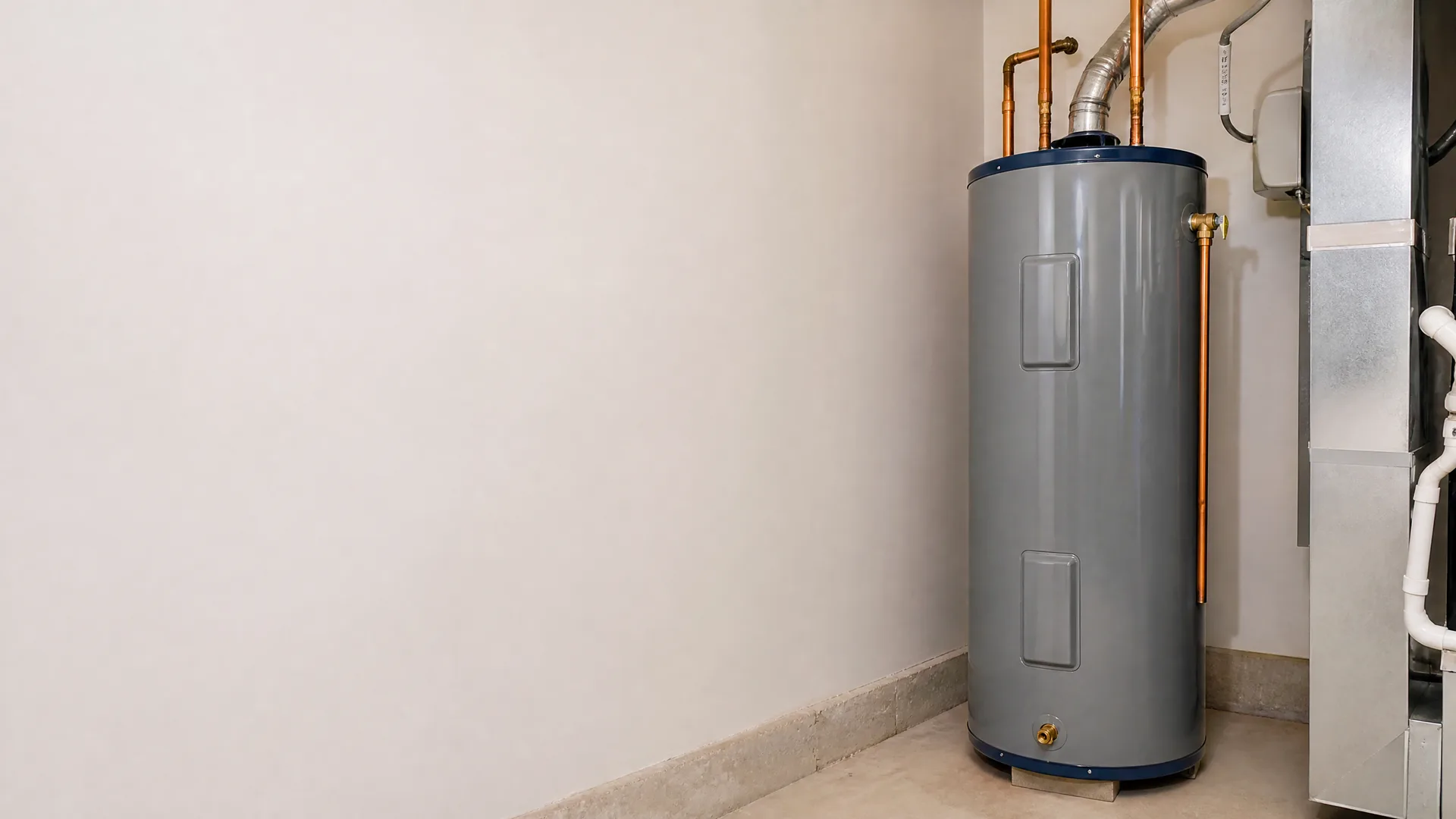
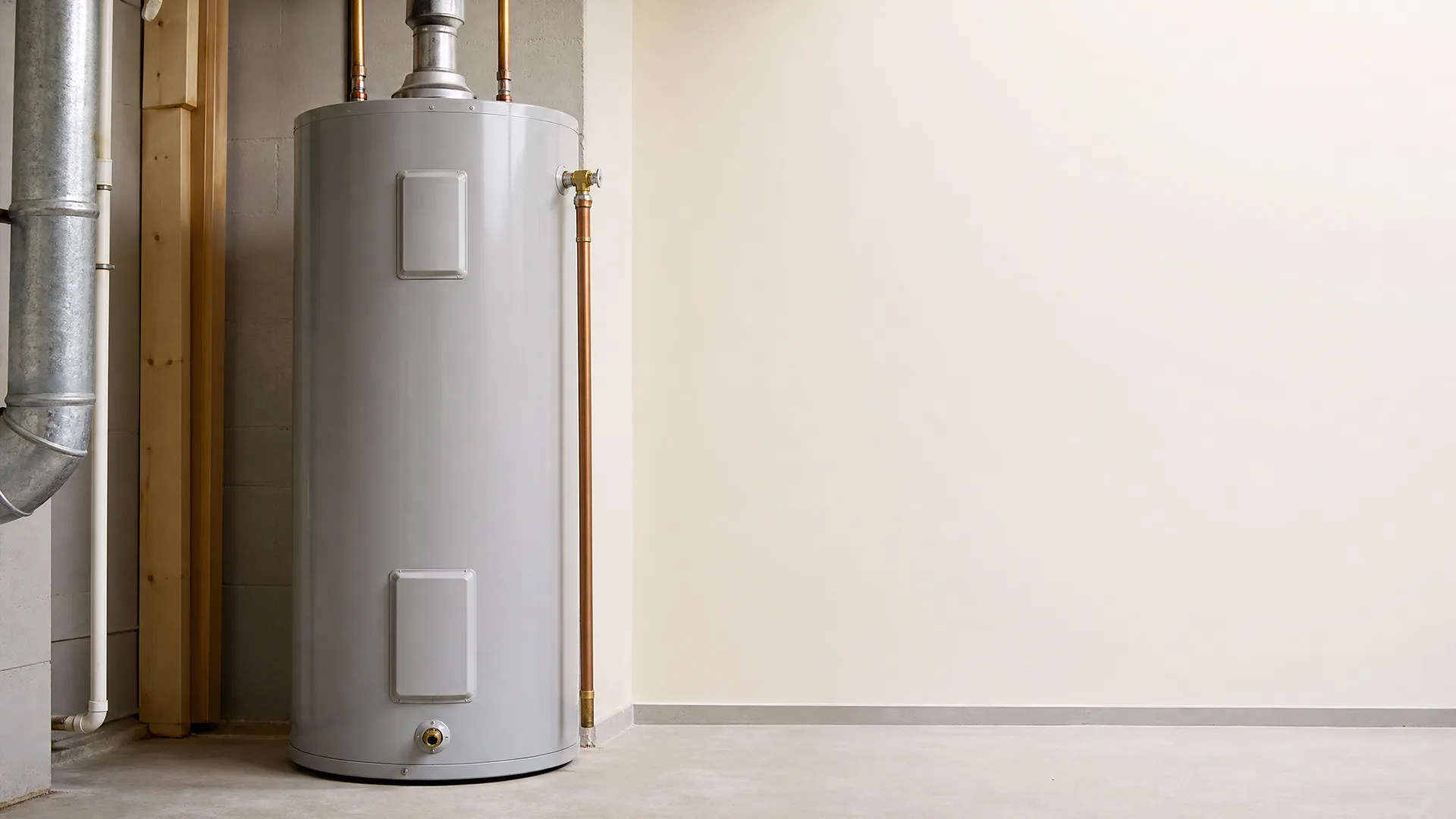
A gray cylindrical water heater with copper pipes stands in a basement corner beside a metal duct and wood framing, next to a plain beige wall and concrete floor.

Why the bottom seam goes first

Heat rises inside the tank, so the hottest water sits at the top while sediment and scale settle low. That layer traps heat against the steel at the bottom seam, where the tank is already welded and under the most stress. Once rust works through from the inside, the water finds the weakest point first. That's why so many Arizona units leak low and near a seam rather than partway up the side.

A gray cylindrical water heater with copper pipes stands in a corner of a basement utility room beside metal ductwork and white PVC piping.

What the anode rod does

Most tanks have a sacrificial anode rod that corrodes instead of the steel around it, as long as it still has metal left to give up. Hard water speeds up how fast that rod gets used up, since the minerals in it react with the metal faster than soft water does. Once the rod is gone, the tank itself starts absorbing the corrosion, and that's usually when a dry unit starts showing a wet spot.

59.9% of homes statewide heat with electricity

Most homes in Arizona heat water with electricity, so when a tank fails here, there's no gas valve or pilot line in the mix. If yours is leaking, the cause almost always traces back to the tank itself or the electric heating element, not a gas connection.

ACS 2020-2024 5-year B25040

A leak you catch early is a swapped valve or a tightened fitting, often without losing hot water for more than a few hours.

A leak you let run finds the particleboard or drywall under the tank, and by then the job is a replacement, not a repair.

A woman in a cream cowl-neck sweater sits by a window with snow outside, in a dimly lit living room with a sofa, lit lamp, mirror, candles and a fireplace.
A woman in a gray turtleneck sweater sits beside a large window looking out at snow-covered evergreen trees, in a dimly lit living room with a lit fireplace, lamps, couch and houseplant.
A woman in a cream turtleneck sweater stands beside a large window with snow-covered ground and bare trees outside, in a dimly lit living room with lamps, a sofa and framed art.
A woman in a grey cowl-neck sweater stands indoors near a window, looking out at falling snow, with a lamp, framed picture and couch in the warmly lit room behind her.

A pro who works on water heaters

A leaking water heater in Arizona almost never waits for a convenient week. You notice it, then you're left figuring out who even works on electric water heaters, whether they can come before the drywall underneath is ruined, and what a fair price looks like when you've got nothing to compare it to. That's the part worth handing off. Instead of calling around to find someone licensed who answers the phone, explaining the same puddle and the same rusted seam to every one of them, and then sitting with a stack of quotes you can't really judge, you put in your details once. One contractor who takes on jobs like yours in Arizona gets your request and reaches out to you. You're still the one deciding what happens with your water heater. You just stop being the one who has to track down who's even available to look at it.

What the leak is telling you

  • A loose fitting or a failed valve can be repaired in a single visit and the water heater keeps running.
  • A tank rusted through from the inside has no repair; the steel is already compromised and replacement is the only option.
  • Arizona's hard water and electric heating elements both point the likely cause toward the tank or element, not a gas line.
  • Catching the leak at the first wet spot usually means a few hours without hot water instead of a damaged floor.
  • Letting it run past that point risks the subfloor or drywall underneath, turning a repair into a bigger job.
  • Where your water heater falls on that line determines what happens next, and a contractor who works on electric units can tell you which one you're looking at.

A leaking water heater comes down to one of two situations. Either something failed that can be swapped or tightened, or the tank itself gave out and there's no fixing that. The fitting, the pressure relief valve, the drain valve, those are parts. A rusted tank is the steel itself, and once Arizona's hard water has scaled it up enough to eat through from the inside, no repair changes that. The location of the water tells you a lot before anyone shows up. Water at a connection or valve points to a part. Water weeping from the tank body, especially low near the bottom seam, points to the steel. Since most homes here run electric, you can also set aside anything involving a gas valve or pilot line. The cause is almost always the tank or the heating element. What matters most right now is how long the leak has been going. Caught early, at the first wet spot, this is usually a repair and a few hours without hot water. Left alone, it finds the subfloor or the drywall, and then it's not a repair anymore. You don't need to diagnose which one you have before getting someone out there. You need an electric water heater contractor who can look at it once and tell you straight, instead of you spending the afternoon calling around and explaining the same leak to five different people.

At dusk, a dark board-and-batten house with a standing-seam metal roof and lit entry walkway of stone pavers, with two large outdoor heat pump units on a stone-walled pad at right and trees and hills in the background.

Water Heater Repair

Get your water heater to the right pro

Step 1 of 3: Equipment
  • A ceramic vase holding leafy green branches and a shallow wooden bowl sit on a wooden window ledge beside a sunlit window, with a cream upholstered chair and knit throw in the foreground.
    • Say what's going on with your water heater, and a pro who works on them reaches out.
    • A local pro who knows water heaters gets your details and gets in touch.
  • Sunlit living room corner with a beige upholstered sofa, a round wooden side table holding a ceramic vase of olive branches, linen curtains at a window, a floor vent in the baseboard, and a woven jute rug on hardwood flooring.
    • Send the request today and stop worrying about who to call.
    • Send the request today and let a water heater pro reach out to you.
  • A wooden side table with a single drawer holds a shallow carved wood bowl and a white ceramic vase of green eucalyptus stems, beside a window and an upholstered chair draped with a cream knit throw.
    • Fill out one short form instead of calling around.
    • Explain the job once and skip repeating it on every call.
  • Corner of a house with horizontal siding, a white-framed window and stone veneer base, beside a covered entry with wooden steps, a potted plant, mulched beds of green shrubs and a flagstone path.
    • Only one pro gets your request, so you hear from one company.
    • Your request stays with one local pro.