Tell us about the job
Takes about a minute. No obligation.
A contractor quoting a gas water heater replacement here starts with the venting arrangement, not the tank size. Utility gas heats more occupied homes in Cochise County, Arizona than any other fuel, at 50.0% (2020-2024 ACS 5-year). That majority means most homes already carry a gas combustion appliance somewhere on the same flue system, and adding or swapping a water heater changes the draft dynamics the existing setup was built around. Shared venting that worked with one appliance can backdraft with two, or starve a new high-efficiency unit of the combustion air it needs. The contractor has to establish what is already in the mechanical room before the right unit can be specified.
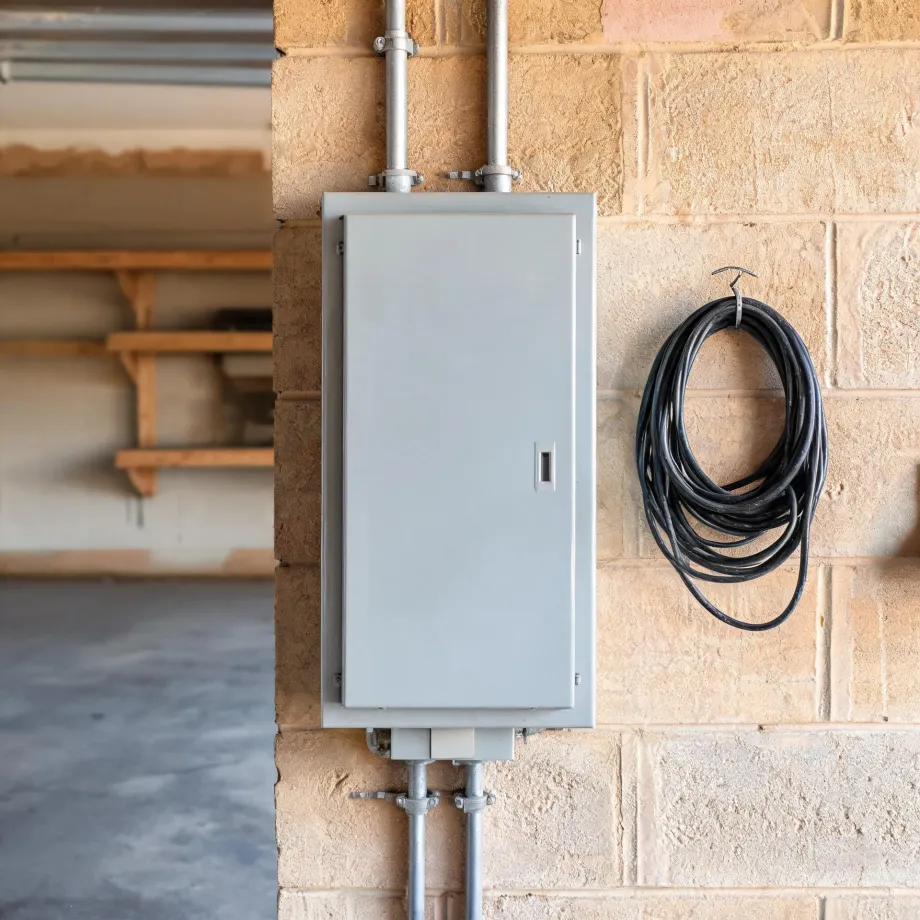
The panel behind the wall decides more than the water heater itself does. Half the homes in Cochise County, Arizona were built in 1987 or earlier (2020-2024 ACS 5-year). A house built in that era was wired for the loads of that era, and a water heater going in now draws on service that was never planned around it. A licensed contractor will pull the panel before quoting anything, because the electrical is where the job can change in scope and cost before a single fitting is touched.
What Gets Installed With a New Water Heater
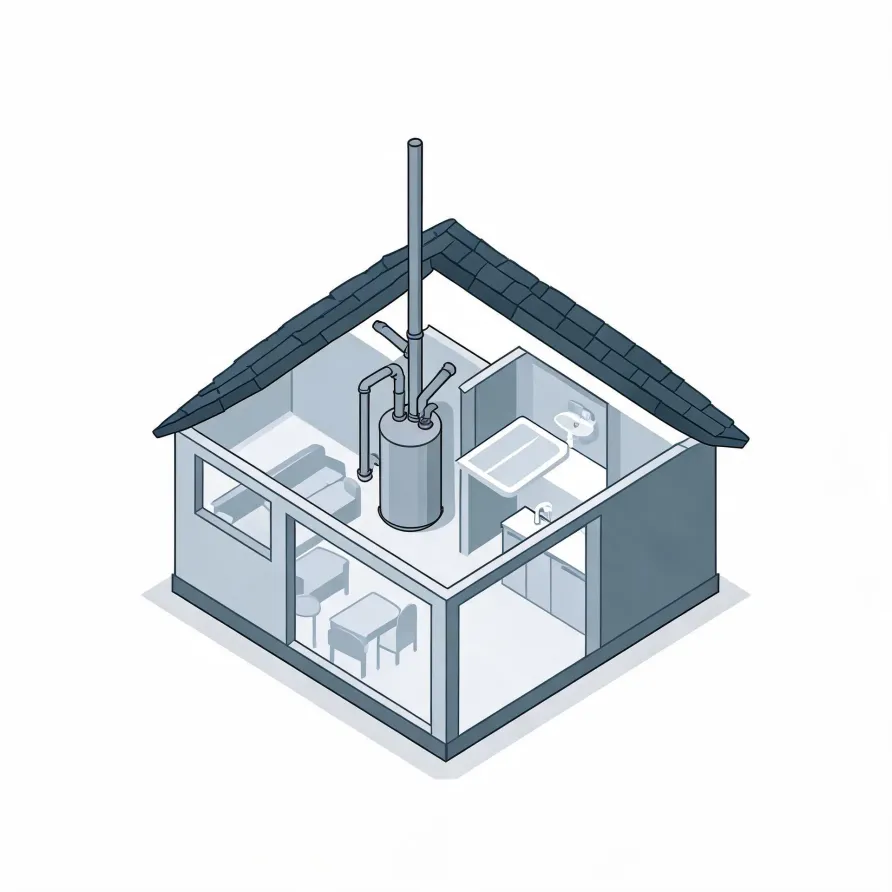
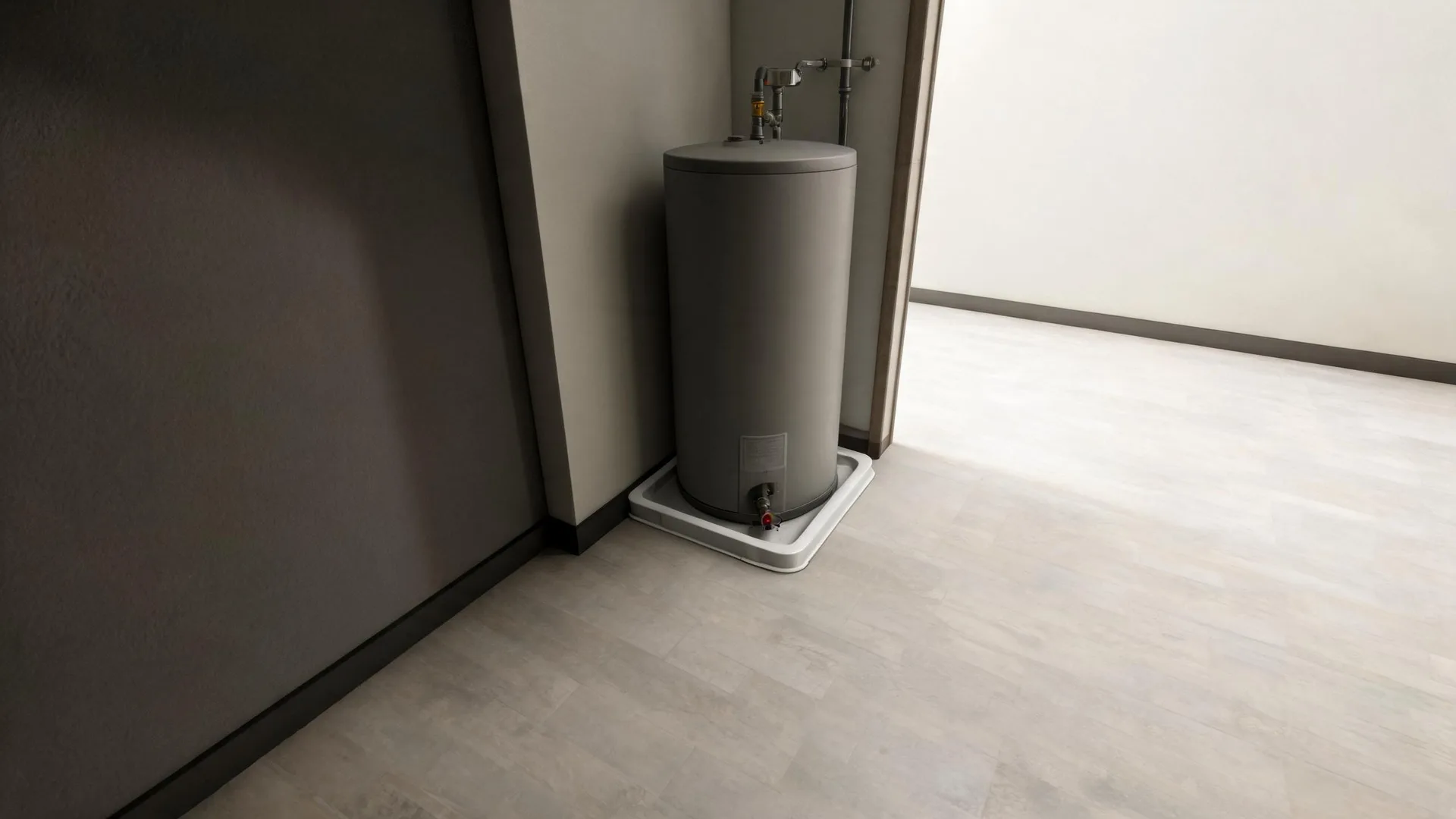
The tank or tankless unit is the heart of the installation. A storage-tank model sits in a utility closet, garage, or basement and holds a reservoir of heated water ready for use. A tankless unit mounts to a wall and heats water on demand as it passes through.
Cold-water supply lines feed into the unit, and hot-water outlet lines carry the heated water to every fixture in the house. A pressure relief valve mounts directly on the tank as a safety device, and a drain valve sits near the base. Gas models add a flue pipe that runs up through or out of the wall to exhaust combustion gases.
The drawing shows a representative layout, and a licensed contractor determines exactly what applies to your house.
Find a contractor in Cochise CountyCochise County, by the numbers
190 severe weather events were recorded in Cochise County, Arizona between 2015 and 2024.
NOAA National Centers for Environmental Information, Storm Events Database, bulk CSV export, events 2015-01-01 through 2024-12-31.Half the homes in Cochise County, Arizona were built in 1987 or earlier (2020-2024 ACS 5-year).
U.S. Census Bureau, 2020-2024 American Community Survey 5-Year EstimatesCochise County, Arizona holds 59,666 housing units (2020-2024 ACS 5-year).
U.S. Census Bureau, 2020-2024 American Community Survey 5-Year EstimatesOwners occupy 71.0% of the occupied homes in Cochise County, Arizona (2020-2024 ACS 5-year).
U.S. Census Bureau, 2020-2024 American Community Survey 5-Year EstimatesSevere Weather Events in Cochise County
Extreme weather puts real demands on water heating equipment, forcing it to work harder and wear faster than baseline conditions account for. How often that pressure arrives in Cochise County shapes what a water heater installation here needs to handle.
190 severe weather events, 2015–2024. Source: NOAA National Centers for Environmental Information, Storm Events Database.