Tell us about the job
Takes about a minute. No obligation.
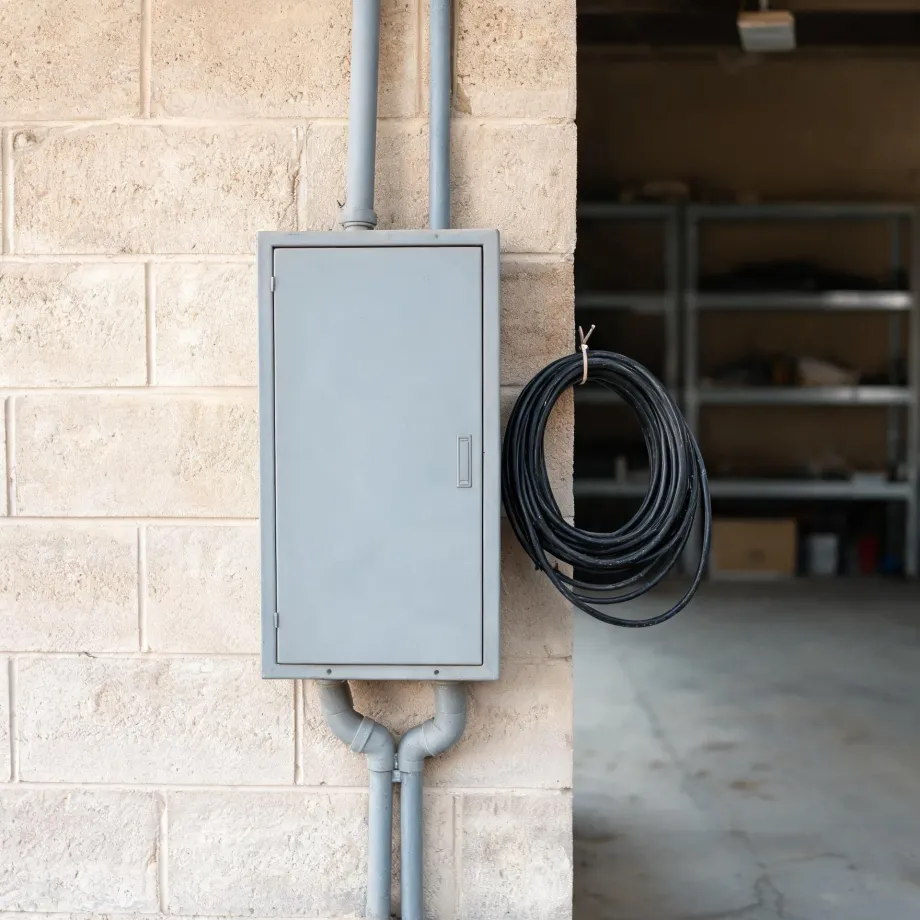
Electric fuel dominates so completely here that a contractor quoting a water heater replacement is almost always working inside an all-electric home. Electricity heats more occupied homes in La Paz County, Arizona than any other fuel, at 70.4% (2020-2024 ACS 5-year). That share means the wiring, the panel capacity, and the breaker feeding the unit all have to be confirmed before a new water heater is ordered, because undersizing the circuit produces a heater that never fully recovers between draws. Venting decisions and combustion air calculations, which vary by fuel, are settled at the start rather than discovered mid-install.
Ductwork and existing utility runs answer more questions about a water heater installation than the unit itself does. Half the homes in La Paz County, Arizona were built in 1985 or earlier (2020-2024 ACS 5-year). Housing that old was built around equipment with different venting requirements, and those original configurations do not always accommodate what a modern water heater needs. A licensed contractor will assess the existing flue, the available gas line or electrical service, and the space before anything gets ordered. What they find in those spots is what sets the scope.
What a Water Heater Installation Covers
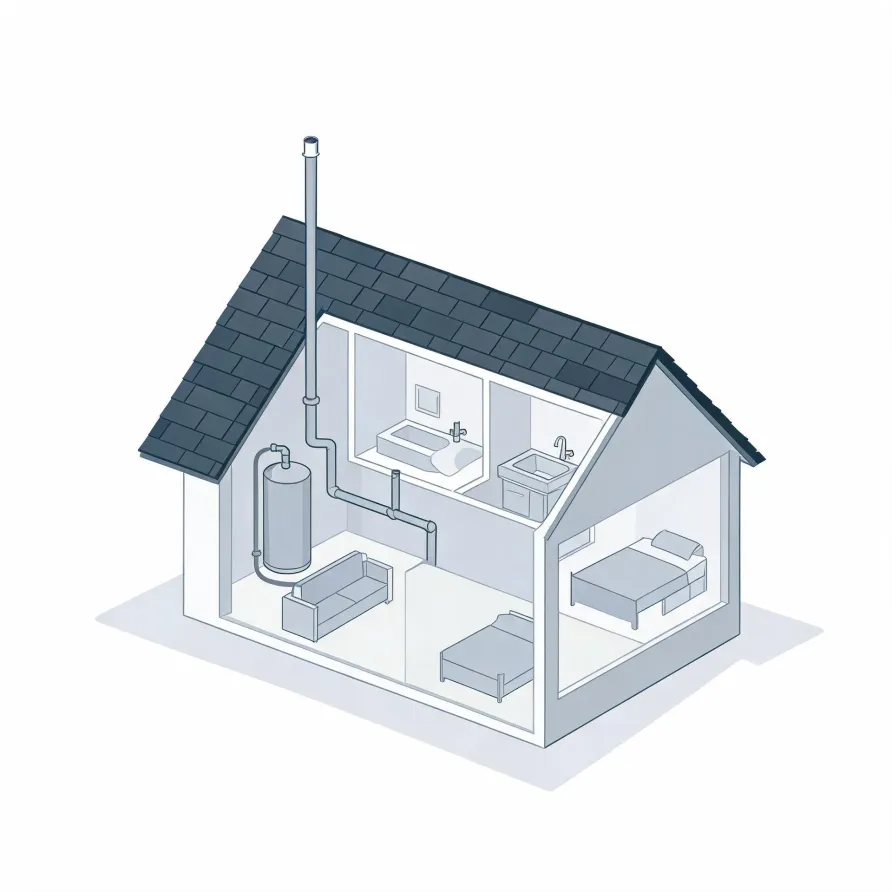
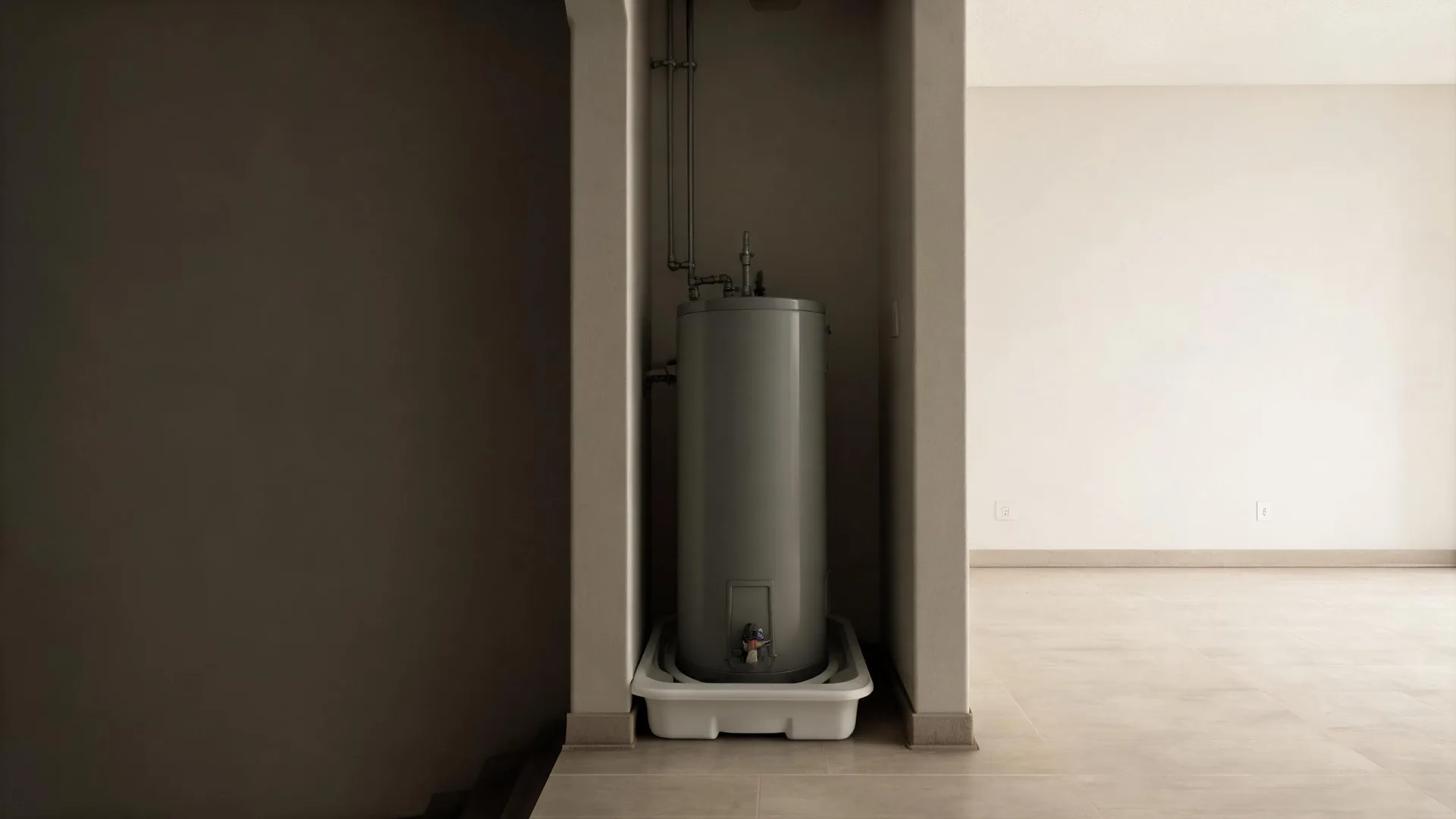
The storage tank is the piece a homeowner sees first, usually standing in a utility closet, garage, or basement. It holds and heats the water your household draws on. Attached to the top are the hot and cold water lines, and on gas models a flue pipe runs up through or out of the wall to vent combustion gases.
The pressure relief valve mounts on the side of the tank and releases if pressure inside climbs too high. The drain valve sits near the base and gives a contractor access to flush sediment. A gas model also has a gas supply line running to a control valve and burner assembly at the bottom of the tank.
The drawing shows a representative layout, and a licensed contractor determines what applies to the specific setup in your home.
Find a contractor in La Paz CountyLa Paz County, by the record
34 severe weather events were recorded in La Paz County, Arizona between 2015 and 2024.
NOAA National Centers for Environmental Information, Storm Events Database, bulk CSV export, events 2015-01-01 through 2024-12-31.Half the homes in La Paz County, Arizona were built in 1985 or earlier (2020-2024 ACS 5-year).
U.S. Census Bureau, 2020-2024 American Community Survey 5-Year EstimatesLa Paz County, Arizona holds 13,672 housing units (2020-2024 ACS 5-year).
U.S. Census Bureau, 2020-2024 American Community Survey 5-Year EstimatesOwners occupy 72.1% of the occupied homes in La Paz County, Arizona (2020-2024 ACS 5-year).
U.S. Census Bureau, 2020-2024 American Community Survey 5-Year EstimatesSevere Weather Events in La Paz County
Extreme weather puts direct stress on water heaters, forcing them to work harder and wear faster than manufacturers' ratings assume in mild conditions. La Paz County has its own weather history, and that history shapes what a water heater here actually endures over its lifetime.
34 severe weather events, 2015–2024. Source: NOAA National Centers for Environmental Information, Storm Events Database.