Tell us about the job
Takes about a minute. No obligation.
A water heater replacement here starts with what the house already burns. Electricity heats more occupied homes in Maricopa County, Arizona than any other fuel, at 68.4% (2020-2024 ACS 5-year). That share means most homes are wired for electric units, so a contractor quoting a new installation confirms the service panel can carry the load before the unit is ever ordered. A gas conversion requires a flue, combustion air, and a gas line that may not exist. Sizing the tank matters, but the fuel decision shapes everything that comes before it.
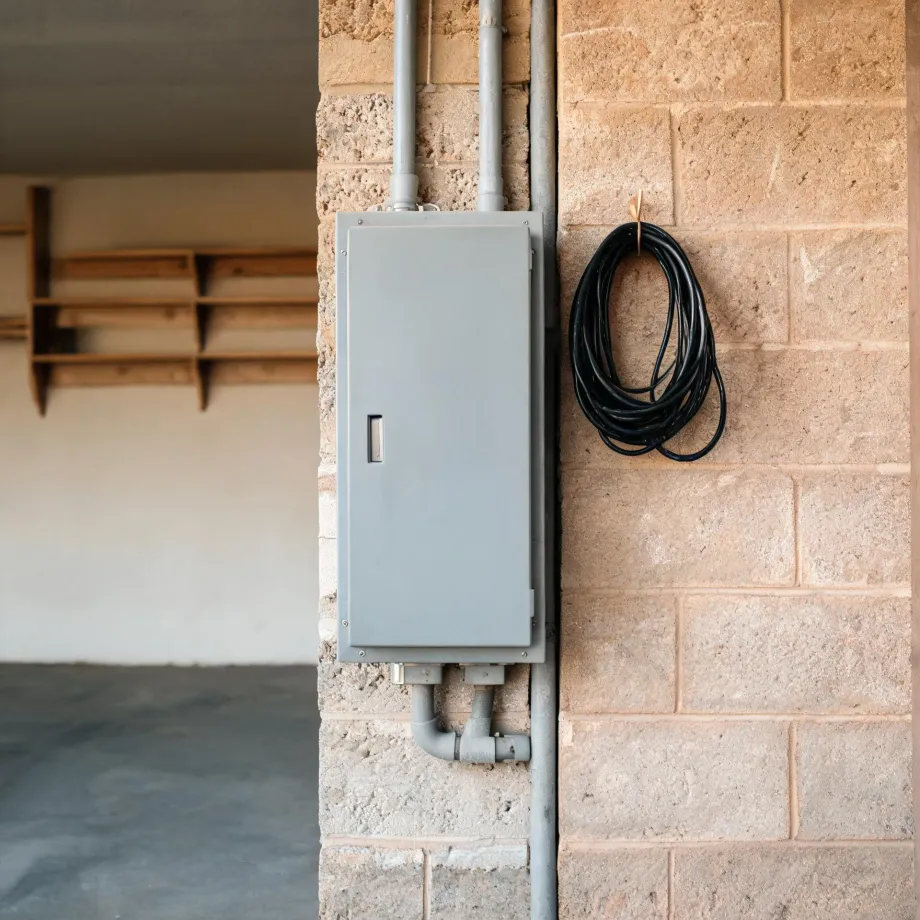
Electrical service is where a water heater installation in this county gets decided. Half the homes in Maricopa County, Arizona were built in 1993 or earlier (2020-2024 ACS 5-year). A house built to that standard was wired for loads that older equipment asked of it, and a contractor sizing a new unit has to confirm the panel will carry what it actually draws before the equipment is priced. If the service falls short, the electrical work becomes part of the job.
What a Water Heater Installation Covers
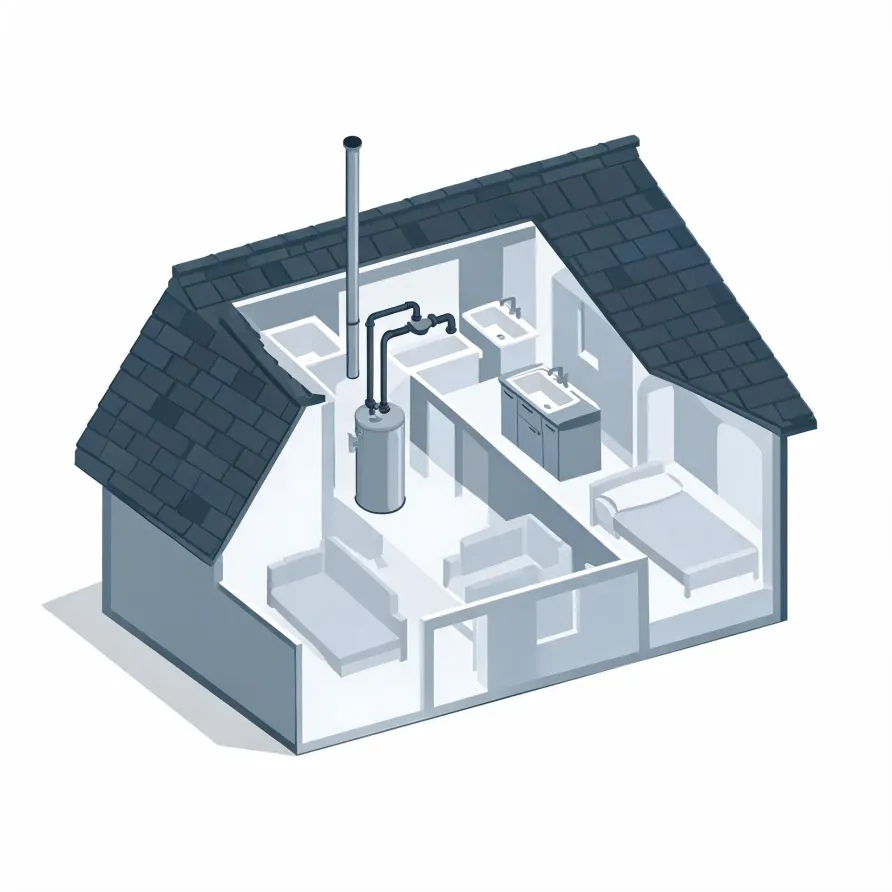
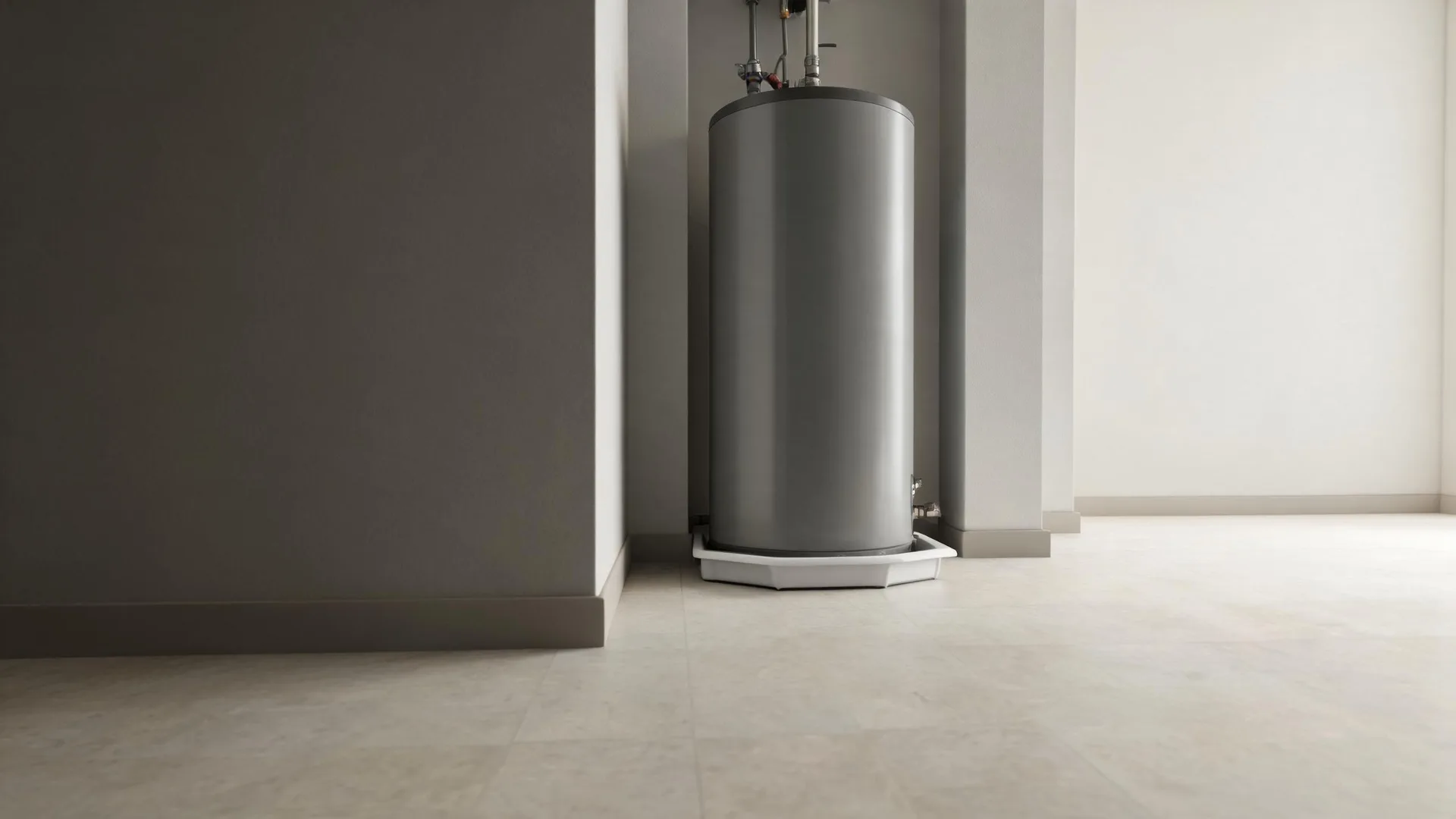
The tank or tankless unit is the heart of the system, sitting in a utility closet, basement, or garage and holding or heating water on demand. Attached to it are the cold-water inlet, the hot-water outlet, and a pressure-relief valve that keeps the unit operating safely.
A gas water heater connects to a supply line and a flue that vents combustion gases out of the house. An electric unit ties into a dedicated circuit breaker. Either type connects to the home's existing water supply lines, and a drain pan sits beneath the unit to catch any overflow.
The drawing shows a typical layout, and a licensed contractor determines exactly what applies to this house.
Find a contractor in Maricopa CountyMaricopa County, by the numbers
835 severe weather events were recorded in Maricopa County, Arizona between 2015 and 2024.
NOAA National Centers for Environmental Information, Storm Events Database, bulk CSV export, events 2015-01-01 through 2024-12-31.Half the homes in Maricopa County, Arizona were built in 1993 or earlier (2020-2024 ACS 5-year).
U.S. Census Bureau, 2020-2024 American Community Survey 5-Year EstimatesMaricopa County, Arizona holds 1,884,334 housing units (2020-2024 ACS 5-year).
U.S. Census Bureau, 2020-2024 American Community Survey 5-Year EstimatesOwners occupy 65.2% of the occupied homes in Maricopa County, Arizona (2020-2024 ACS 5-year).
U.S. Census Bureau, 2020-2024 American Community Survey 5-Year EstimatesSevere Weather Events in Maricopa County
Extreme weather puts real demand on water heaters, forcing them to work harder and recover faster than steady conditions require. How often that pressure hits in Maricopa County shapes what the right equipment looks like and how it should be installed.
835 severe weather events, 2015–2024. Source: NOAA National Centers for Environmental Information, Storm Events Database.